

Cream Ridge, NJ, a frequent traveler Edward Granaghan enjoys traveling to various locations, including Europe. One of the most culturally rewarding regions of the Mediterranean is the south of France. A classic itinerary starts with Marseille and explores surrounding areas such as Aix-en-Provence.
Across the border from Spain, Marseille is the oldest city in France, with its very name conjuring up a distinct way of life, such as playing petanque, a game similar to bocce. Described as an “open air museum,” the historic neighborhood of Le Panier sits on a bluff that provided ancient Phoenicians with a vantage point for controlling trade. Across the centuries, it evolved into a bustling Greek port city that included an agora marketplace and an Athena-dedicated acropolis.
By the Middle Ages, development had shifted to the other side of the port, and Le Panier had a squalid, though lively, reputation. In 1943, at the height of the Second World War, and with German occupation a fact of life, the narrow alleyways and jumbled buildings were a natural place for Resistance activities. For this reason, some 1,500 buildings were destroyed, with 30,000 people evicted and many arrested. Despite this brutality, the remnants of the district flourished after the war, with boutique businesses and craftspeople taking root, creating a fashionable, historic vibe that continues into the present. Street art is part of the equation, with frescoes and graffiti vying for attention on many of the ancient walls and buildings.
Another highlight is the Hotel de Cabre, which was constructed in 1535 and somehow spared during occupation, when the ancient quarters around it were razed. Featuring ornate facades, the mansion has been lifted with jacks and turned a full 90 degrees so that it aligns with the modern street grid.
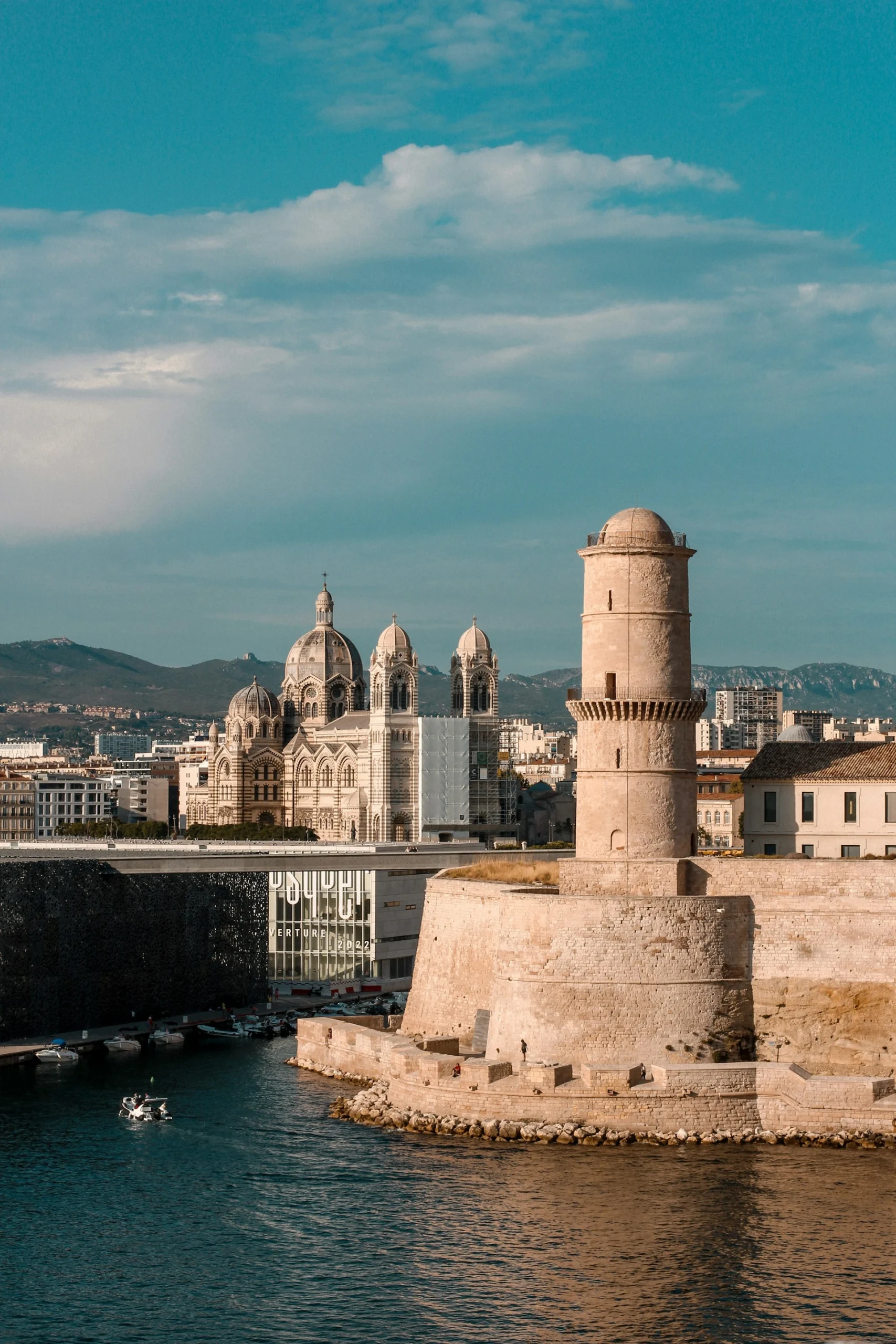
The Vieux Port is a quaint neighborhood where ships have docked for thousands of years. While the principal commercial docks have been moved to Joliette for nearly 200 years, the docks harbor numerous tourist vessels and yachts as well as traditional fishing boats. The ancient forts of St-Nicolas and St-Jean demarcate the district, which features many brasseries, cafés, promenades, and the Quai des Belges Fish Market. The harbor is overlooked by the picturesque Notre Dame de la Garde, which sits on a rocky promontory above the bustling district.
Those in search of a memorable maritime excursion can take the ferry 20 minutes to Chateau d’If, a small island in the bay that only gained inhabitants under Francois I in the 1500s, when a fort was built on it. The island today is a popular landmark that provided the memorable fictional setting of Alexandre Dumas’ The Count of Monte Cristo.
Located only 20 miles north of Marseille in the Alps foothills, Aix-en-Provence is a world apart, embodying the sun-kissed, idyllic, elegant styles of centuries past. Among the most noteworthy sites is the Cours Mirabeau, a main boulevard that took the name “Champs-Elysées of Provence” in the 17th and 18th centuries. Today, as in the past, pedestrians enjoy a wide promenade that offers the opportunity to see and be seen, with stylish old mansions as a backdrop.
Until 2019, when fire gutted the establishment, locals and tourists would take in daily life on the boulevard at Les Deux Garcons cafe, which was a hangout for artists such as local hero Paul Cézanne, whose family maintained a shop in the neighborhood. There are still many evocative period cafes as well as farmers’ markets that spring up on weekends and holidays. From Aix-en-Provence, travelers such as Edward Granaghan often proceed to the Côte d’Azur, the French Riviera.
