

Certain locations in Wales and England appear to exist a little bit outside of regular time. Among these is Cwmmau Farmhouse. In the isolated area of the Welsh Marches that borders It takes some dedication to get to Herefordshire and Powys—past hedge-lined roads that narrow until you have to pull into a gateway to pass another car, through the kind of countryside where your phone signal goes out for extended periods of time and you have to focus on the scenery instead.
The struggle to get here begins to make sense when the farmhouse finally appears, with its timber frame, stone-tiled roofs, and collection of vernacular barns blending into the surroundings as if they grew there.
| Category | Details |
|---|---|
| Property Name | Cwmmau Farmhouse |
| Location | Cwmma Road, Brilley, Hereford HR3 6JP, United Kingdom |
| Year Built | Early 1600s |
| Building Type | Grade I listed timber-framed vernacular farmhouse |
| Open Days (Annual) | Eight public open days per year |
| Holiday Let | Available as holiday cottage (long weekends) |
| Film Appearance | Hamnet (2025) — directed by Chloé Zhao, based on Maggie O’Farrell’s novel |
| Film Role | Cwmmau appears as Hewlands — childhood home of Agnes, Shakespeare’s wife |
| Key Architectural Features | Oak beams, stone-tiled roof, leaded windows, elm and oak floors, bread ovens |
| Bedrooms | Five (including one with four-poster bed) |
| Nearest Town | Kington (5 miles); Hereford (20 miles) |
| Nearby Attractions | Hay-on-Wye, Brecon Beacons, Black Mountains, The Weir Garden (NT) |
| Custodian | National Trust |
Constructed in the early 1600s, Cwmmau was originally one of Brilley’s three major farms, contributing to the region’s centuries-long agricultural foundation. Bread ovens in the old kitchen, massive oak beams darkened by four centuries of fire smoke, elm floors worn smooth in patterns that tell you where people habitually walked, and leaded windows that bend light coming through them in ways that modern glazing doesn’t are just a few examples of the kind of layered detail that no amount of intentional restoration can create.
It’s important to note that the home has been maintained rather than repaired by the National Trust, which currently looks after it. Instead of being used, the historic kitchen is preserved for viewing, with its stoves, tools, and other items arranged as chambers that were left unaltered rather than as a museum exhibit.
Cwmmau has a specific moment in 2025 because of the movie link. The farmhouse was chosen as the setting for Hamnet, the adaptation of Maggie O’Farrell’s acclaimed novel about the loss that formed Shakespeare’s most renowned tragedy, by Chloé Zhao, who received the Academy Award for directing Nomadland. In the movie,
Cwmmau turns into Hewlands, where Agnes, the future wife of Shakespeare, grew up. The home doesn’t have to pretend to be sixteenth century; there’s something appropriate about using an actual location of this age and texture to depict a story from that same era. In every significant manner, both aesthetically and atmospherically, it is.
Cwmmau is purposefully inaccessible. For the majority of visitors, there are only eight public open days available throughout the year to explore its rooms. The National Trust manages a property that is both a historically significant building and, during some seasons, a functional vacation cottage, so the restriction isn’t arbitrary. You can reserve long weekends at the farmhouse, which completely changes the experience.
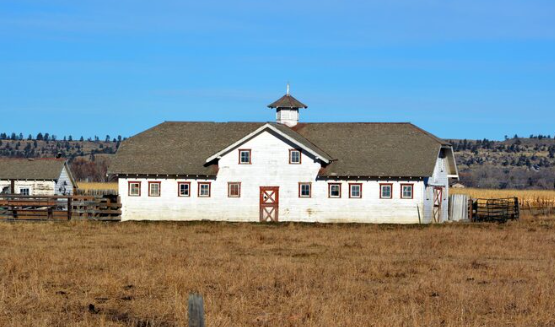
If you stay here, you’ll wake up in a four-poster bedroom in a four-century-old building, go across a cobblestone courtyard to get to the garden before anyone else does, and enjoy coffee on the original porch as morning light streams into the wildflower meadow beyond the garden. The contemporary kitchen that was built down the hall from the original one offers all the amenities required without compromising the historic character of the most important rooms.
Cwmmau is more than just a historic structure in a field; it feels like a whole experience because of the surrounding scenery. The property is connected to walking trails through woodland and across ridges with Iron Age hillforts atop them via footpaths and a bridleway. For those seeking elevation and the unique delight of a hilltop perspective over many counties, Hay Bluff is a fair walk or short drive away.
On clear days, the Bannau Brycheiniog—the Brecon Beacons—can be seen from higher terrain nearby. With its well-known used book stores and yearly literary festival, Hay-on-Wye is close enough for an afternoon visit without taking away from the impression of being somewhere truly far away.
Sitting in the grounds at Cwmmau in nice weather gives me the impression that the home is self-sufficient without the National Trust affiliation or the movie link. Since individuals who were living while Shakespeare was writing were cultivating this land, it has stood here doing what a farmhouse does. On its own terms, that suffices.
