
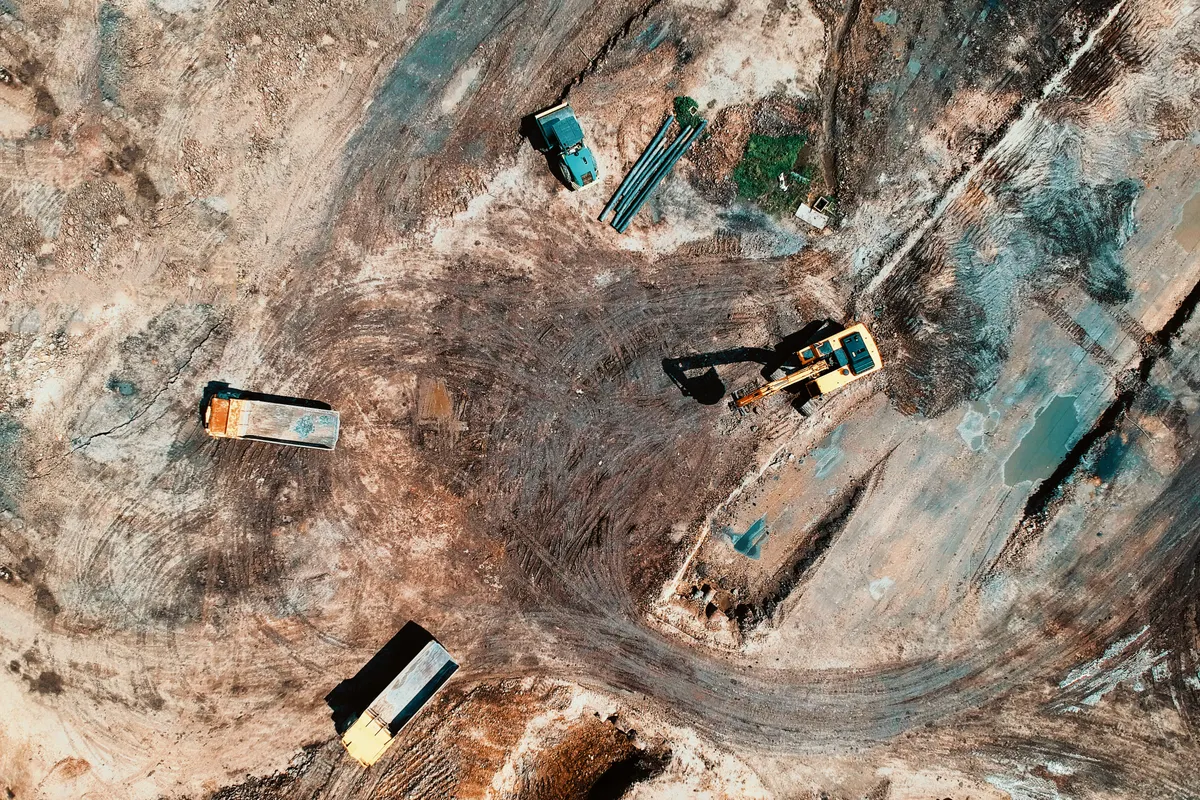

Bulldozers have entered Big Bend National Park and begun clearing ground for what appears to be a patrol road, with Big Bend construction CBP activity now under way even as Customs and Border Protection (CBP) insists it remains ‘in the initial stages of planning and design.’ The disconnect between active earthworks and an agency declining to publish detailed plans has drawn sharp criticism from conservationists and former park officials.
Bob Krumenaker, former Superintendent of Big Bend National Park and chair of Keep Big Bend Wild, reported on 6 August that bulldozers are clearing a right of way for a new road in the south-western section of the park, immediately adjacent to the existing paved road from the Santa Elena boat ramp and heading east. ‘While CBP has said it would utilise existing roads where possible, they have given no explanation for cutting a new road right alongside an existing road,’ Krumenaker said in an emailed statement.
The route heads toward Cottonwood Campground and the Castolon Historic District. The impact on both sites is, in Krumenaker’s words, ‘unknown, but likely devastating’ for the campground. The new road sits within the Rio Grande floodplain, an area prone to frequent flooding, and passes through designated critical habitat for the yellow-billed cuckoo.
Environmental Laws Waived to Enable Big Bend Construction
That critical habitat designation would ordinarily provide a legal barrier to construction. The Secretary of Homeland Security removed that obstacle by waiving the Endangered Species Act, along with a raft of other federal environmental protections. According to the Center for Biological Diversity, the waiver covers dozens of laws, including the National Park Service Organic Act and the National Wild and Scenic Rivers Act, legal frameworks specifically designed to protect land of the kind now being cleared.
The scope of what the waiver permits is considerable. Reporting by The Guardian details that the proposed vehicle barrier system would consist of steel rails and posts measuring 4 to 6 feet tall, accompanied by 205 miles of roads up to 24 feet wide equipped with detection technology. The same waiver empowers CBP to build infrastructure ranging from 30ft steel bollard fencing to unpaved patrol roads.
CBP’s own mid-June announcement described a plan involving 17 miles of metal vehicle barriers and over 200 miles of patrol roads, communications and power cables, and other surveillance infrastructure. Despite the scale of that proposal, the agency has not shared detailed plans with the public.
CBP’s Smart Wall Map Raises More Questions Than Answers
The agency does maintain a document known as the Smart Wall Map, which provides a general overview of the project. Krumenaker characterised it as containing ‘confusing details and contradictions,’ adding that it ‘serves to further obscure whatever the actual plans are.’ The map has been altered repeatedly: a border wall within the park’s boundaries was removed and then reintroduced, and a new route across Mariscal Mountain appeared in a recent update.
When contacted for clarification on the Mariscal Mountain route, CBP told reporters that ‘CBP has no plans for blasting of Mariscal Mountain in the Big Bend National Park,’ and that the agency ‘is in the initial stages of planning and design of this project.’ CBP added that it ‘has been and will continue to coordinate closely with the National Park Service to ensure that access to the Rio Grande River and hiking trails such as the Mariscal trail remain accessible at the park during and after construction.’ A follow-up question asking whether any road construction at Mariscal Mountain was planned, regardless of blasting, had not received a clear answer at the time of reporting.
Big Bend Construction CBP Justifies on Crossing Figures Critics Dispute
CBP frames the Big Bend construction as a necessary response to illegal border crossings. The agency has described the Big Bend sector as ‘an area of high illegal entry,’ citing 89,000 attempted crossings between fiscal years 2021 and 2025. Monthly figures for 2026 have run between 124 and 187 crossings per month, and the annual total for 2025 stood at 3,096, a 74% drop from 2023.
Krumenaker points to a further complication in the agency’s rationale. Big Bend National Park contains 118 miles of border within the sector’s total 517 miles, meaning the park accounts for a fraction of the sector’s crossings. He stated that ‘illegal border crossing activity inside BBNP is less than 0.05% of that along the entire border.’
The total cost of the project is $1.7 billion in taxpayer funding. Whether CBP will publish a full, detailed construction plan before bulldozers move further into the park remains an open question, with Krumenaker calling on the agency to ‘make its plans public now.’
