
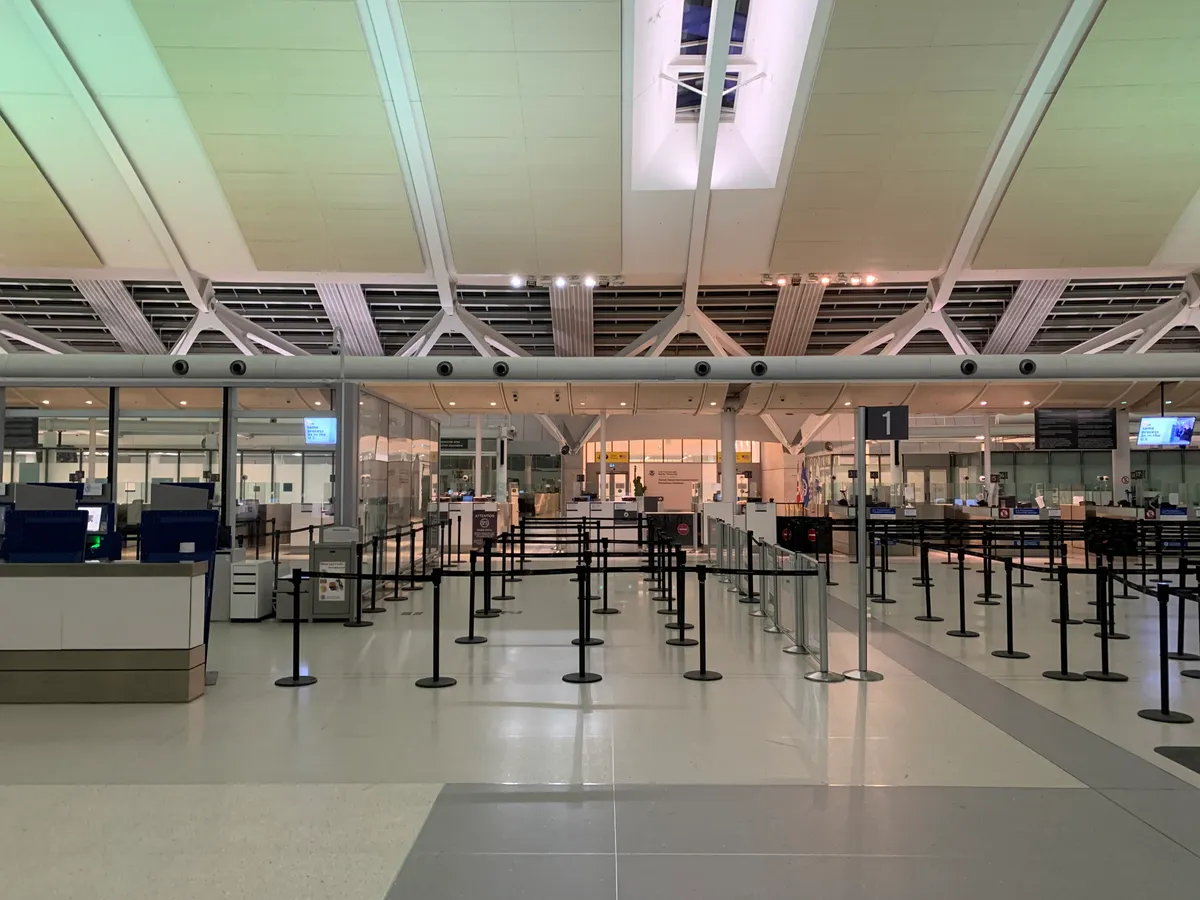

A Tennessee Real ID rejection problem at airport security checkpoints has been confirmed by the Tennessee Department of Safety and Homeland Security (TDSHS), with the agency saying it has contacted the licence vendor to determine the cause and is offering free replacements to affected travellers.
TDSHS first acknowledged the problem publicly in a Facebook post on 11 August, after several travellers reported online that their valid Real IDs were being refused by Transportation Security Administration (TSA) document-checking equipment. The agency said it is actively reviewing the affected licences and has not yet identified a root cause.
What the Tennessee Real ID Rejection Means at Checkpoints
TSA’s document-checking podiums are unable to read certain Tennessee-issued licences, triggering additional manual verification at security lanes. A TSA spokesperson said officers work ‘as expeditiously as possible to verify each passenger for security screening’ when a Tennessee licence encounters a scanning failure, but the process introduces delays and, in some cases, has required travellers to produce secondary identification.
One traveller reported that her licence failed to scan at Dallas Fort Worth International Airport but that TSA was able to verify her identity using an expired document. Another traveller said his wife has had her licence replaced twice and continues to experience scanning failures, though a TSA supervisor has permitted her through after manual review each time. The report of experience shared by multiple travellers on TDSHS’s social media post points to a consistent pattern rather than isolated incidents.
The technical fault appears linked to portrait quality. Several affected travellers suggested that black-and-white photographs printing too lightly are preventing machines from reading the documents correctly. Tennessee resident Julie Johnson Land wrote that even after visiting a Driver Services Centre and having a new photograph taken, the replacement licence still came out too light for TSA scanners. TDSHS replied directly to Land and confirmed it is using her original licence as a reference case to help identify the defect.
‘I am having my licence remade again. They are using my old licence as one of the examples to try and figure out the issue. I feel like they are genuinely concerned about the licences not working while going through TSA,’ Land told TheTravel.
One commenter suggested colour photographs would resolve the scanning failure. The issue has also surfaced outside aviation: one Tennessee resident reported that her licence would not scan when she went to vote, and was told by polling staff that this was commonly occurring with new licences.
Free Replacements and the Road to a Fix
TDSHS has confirmed that any Tennessee resident whose licence is being refused at TSA checkpoints can visit a Driver Services Centre and receive a replacement at no cost. However, the agency has warned that replacement cards can take between 10 and 20 days from the print date to arrive, a delay that carries practical consequences for travellers with near-term flights.
‘We are aware that a small number of driver licences are not being read by TSA. As soon as we learned of the issue, we contacted the vendor that produces these documents to determine the cause. Anyone who experiences this problem can visit a Driver Services Center and receive a replacement licence at no cost. We are actively working to correct the issue. Even though this is only affecting a small number of Tennesseans, we don’t want anyone inconvenienced,’ TDSHS stated.
The agency said it will publish further information as it becomes available. In the meantime, travellers presenting a licence that fails to scan are being processed by TSA supervisors using manual identity verification procedures, which TSA has confirmed remain available. Travellers who cannot provide an acceptable form of ID at all face a $45 fee to use TSA ConfirmID for identity verification, a measure introduced in February 2026, though affected Tennessee Real ID holders presenting the physical document are being handled under manual rather than ConfirmID protocols.
The Tennessee situation follows documented reports from tribal ID holders, who have experienced similar scanning failures at TSA checkpoints. TSA’s stated policy in those cases is that if a tribal ID cannot be scanned, the document is inspected manually and cross-referenced with the Federal Register. TDSHS has said it will provide updates on the vendor investigation as findings emerge.
