
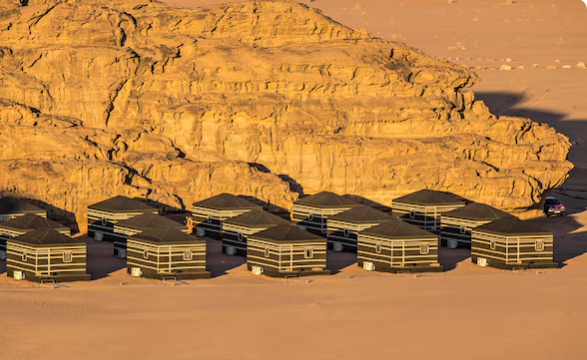

The soil appears to be deceptively empty in the high desert plains east of Reno. Across the sagebrush, dust devils spin. In the distance, mountains seem still and sharp. Then, almost suddenly, the horizon opens up, revealing enormous, windowless structures that sweep across the dunes like metal fortresses. This is Nevada’s Storey County. And, at least in terms of digital wealth, it has just emerged as the most fertile area in the American West.
Google has arrived. Apple is, too. Microsoft, Amazon, and Meta. On this land, Switch constructed one of the biggest data campuses in the world. A tangle of substations, cooling towers, and bustling server rooms now occupy what was once ranchland. This appears to be the foundation of the AI economy, according to investors. Naturally, the irony is that there is hardly any water in this boomtown.
Key Information
| Category | Details |
|---|---|
| Region | American West (Nevada, Arizona, Texas) |
| Hotspot | Storey County, Nevada (east of Reno) |
| Major Companies | Google, Apple, Meta, Amazon, Microsoft, Switch |
| Water Use | Up to 1 million gallons per day per facility |
| Cooling Method | Evaporative cooling towers |
| Risk Factor | High water scarcity regions |
| Environmental Concern | Groundwater depletion, long-term drought risk |
| Reference | https://www.epa.gov/waterdata |
Data centers are thirsty. The servers run hotter as AI models get bigger. Additionally, many sites use evaporative cooling systems, which are essentially enormous cooling towers where water is drained into the desert air, to prevent overheating. Up to a million gallons are used daily in some locations.
You can hear the constant hum of fans and compressors if you’re standing close to one of these facilities. Heat ascends into the sky invisibly. Water vanishes along with it.
This requirement may be lessened by cooling technology in the future. Businesses vow to be innovative. Replenishment initiatives and recycling systems are mentioned in sustainability reports. Nonetheless, it is hard to overlook the current scale. Over 40% of data centers in the United States are situated in regions that are already categorized as having high or extremely high water stress.
Groundwater shortages in Arizona have resulted in the revocation of residential building licenses in certain counties. However, data center permits are still being issued. Facilities have been given permission to use as much water as tens of thousands of people in some situations. It seems like something basic is being put to the test here.
The economic benefit is welcomed by local politicians. Hotels are occupied by construction workers. Revenue from property taxes increases. Although jobs are promised, these facilities frequently have a smaller permanent employment footprint than anticipated. The light of advancement is palpable. Water, however, is not theoretical.
Ranchers in Nevada have historically used rainfall patterns and acre-feet to gauge success. Now, a few kilometers away, they observe large-scale evaporation systems in operation. “We don’t run out of water,” a local resident put it frankly. We run out of equity.
Tension for resources has always existed in the desert. Long before AI had caught the attention of venture capitalists, the Colorado River Compact divided water. Fragility is further increased by climate change, tightening drought cycles, and declining reservoirs. However, the gold rush for data centers is accelerating.
Digital infrastructure, according to developers, is just as necessary as roads and railroads. Healthcare diagnostics, financial markets, and logistical optimization are all powered by AI systems. There must be a place where the servers reside. In the desert, land is less expensive. The zoning is more welcoming. Grids for electricity are growing.
It’s difficult to overlook the scale disparity when you see bulldozers chisel foundations into arid ground. These facilities have been constructed for many years. Many climatologists also measure the drought outlook in decades.
“Stranded assets” are a warning from certain experts. Massive facilities could lie partially vacant and waste resources without producing commensurate returns if the AI market cools or overbuilds. Boom-bust cycles have already occurred in the West in relation to housing developments, oil fields, and mining communities.
Businesses like Google have made a commitment to become “water positive,” meaning they want to replenish more water than they use. The idea seems comforting. However, replenishment frequently takes place in watersheds that are distinct from those where water is used. Accounting may be complicated. The aquifers stay in the area. Prioritization is another subtle issue.
The computing requirement rises as AI models get more complex, managing legal documents, writing code, and creating graphics. More processing power is needed for every small improvement. More chill. More power. More water. Those trade-offs seem less abstract in a climate-stressed area.
Whether regulators will tighten water allocation rules for industrial users is still up in the air. Tech investment is frequently praised by political leaders. Few wish to be perceived as being against growth.
Nevertheless, the contrast is remarkable when traveling through Storey County at dusk. Hills the color of rust. An limitless sky. And behind it are data halls that are constantly processing queries, training algorithms, and covertly using millions of gallons.
It seems as though the West is being asked to support a national aspiration once more. In principle, the digital economy is weightless, but in reality, it is hefty. Land, energy, cooling, and water—especially water—are all necessary. It is difficult to produce in the desert.
The analogy of the gold rush is fitting. Prospectors swarmed the West in search of mineral fortune in the nineteenth century. A few were extremely wealthy. Many didn’t. Permanent changes were made to the landscape.
Instead of wearing badges from mining corporations, today’s prospectors wear badges from computer titans. Instead of pickaxes, they use optic cables as tools. The underlying risk, however, seems familiar.
