
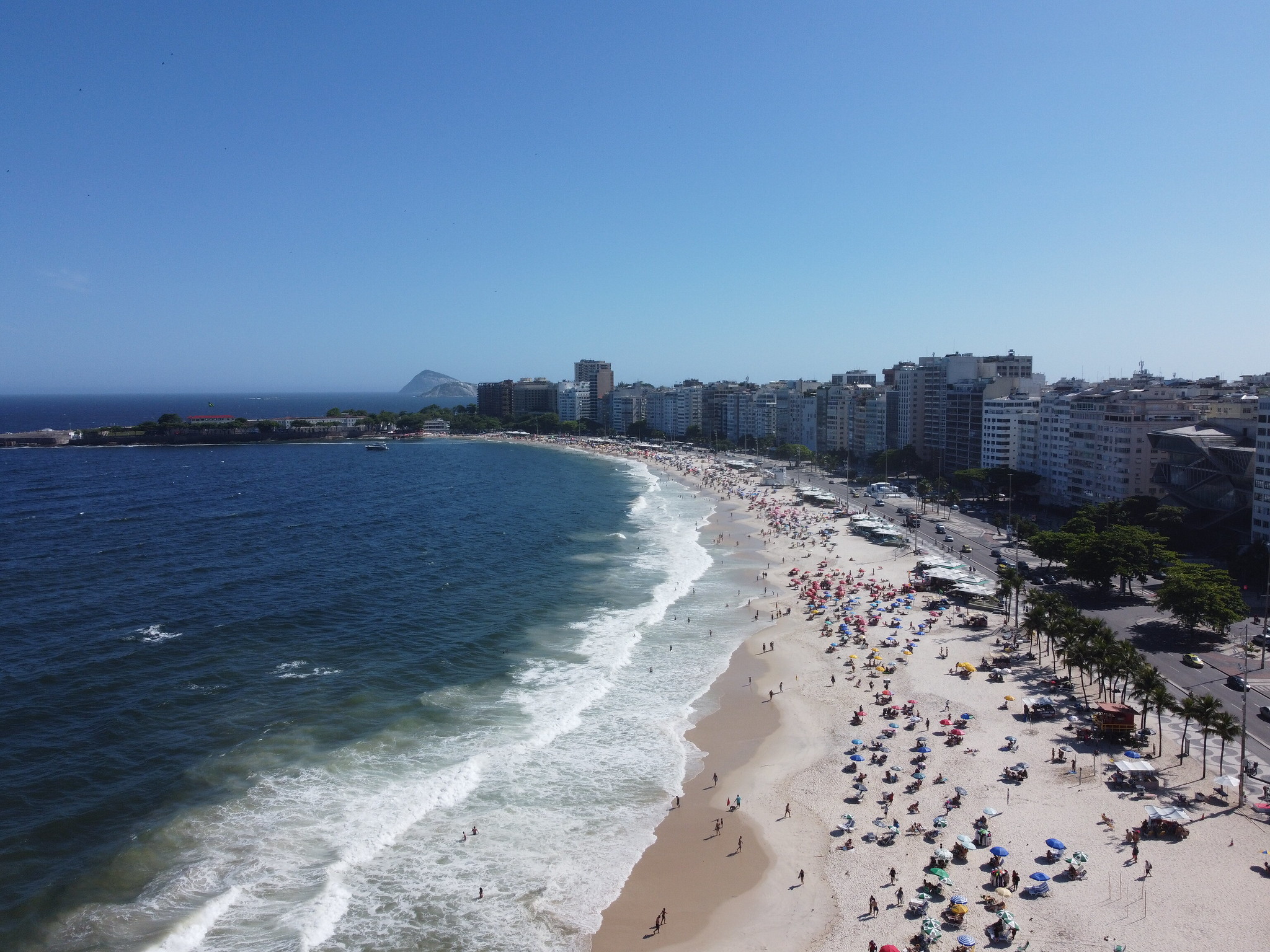

Two million people on a single beach. That’s the target for May 2nd 2026, when Shakira takes the stage on Copacabana’s sands for what organizers are billing as one of the year’s largest music gatherings.
The Colombian superstar will headline the third edition of Everyone in Rio, the free concert series that has transformed one of the world’s most photographed stretches of coastline into an unlikely proving ground for Brazil’s ambitions as a global events powerhouse.
The numbers tell the story of escalation. Madonna drew 1.6 million in 2024. Lady Gaga pulled over 2 million in 2025, pumping approximately R$600 million into Rio’s economy—a 30 per cent jump over Madonna’s economic impact. Now Shakira arrives with credentials that include the highest-grossing tour in history for a Latin artist, a distinction that landed her in the Guinness World Records in 2025 with Las Mujeres Ya No Lloran.
Her trophy case runs deep: 33 Billboard Latin Music Awards, 13 Latin Grammys, three Grammy Awards. On YouTube, she’s racked up over 27 billion views, more than any other female Latin artist on the platform. The free concert will lean heavily on those hits, the songs that built a career spanning continents and decades.
The timing matters. Latin music has claimed unprecedented global territory in recent years, a shift crystallized when Bad Bunny headlined the Super Bowl halftime show. Shakira’s Copacabana performance lands squarely in that moment, celebrating what organizers describe as the strength and projection of Latin culture on the world stage.
For Rio, the concert series has become an annual economic engine. Lady Gaga’s show alone injected R$600 million into the local economy, a figure that underscores why the city has doubled down on the first-Saturday-in-May formula. The beach—already a symbol of Brazilian culture and music—now doubles as a financial asset, pulling tourists and generating revenue that ripples through hotels, restaurants, and transport networks.
Brazil’s 2026 calendar reads like an events promoter’s fever dream. January brought New Year’s celebrations and Carnival, drawing more than 300,000 international tourists from across the globe. Lollapalooza Festival hits at the end of March. Rock in Rio follows in September. By 2027, the country will host the Women’s World Cup across eight cities, welcoming visitors drawn by sport but lingering for nature, food, and the cultural texture that sets Brazil apart.
The Everyone in Rio platform has made Copacabana the centerpiece of this strategy. The beach, flanked by hotels and backed by mountains, offers a natural amphitheater. But transforming it into a venue capable of holding 2 million people requires logistics on a scale few cities attempt. Security, transport, sanitation—the infrastructure demands are staggering, yet the series has now delivered twice without major incident.
What makes the model work is simplicity: free admission, iconic location, global superstar. No tickets to distribute, no gates to manage, no pricing tiers to navigate. Just show up, claim your patch of sand, and watch one of the planet’s biggest artists perform against the backdrop of Guanabara Bay.
For visitors arriving during the concert week, Rio offers more than the beach spectacle. Christ the Redeemer—one of the seven wonders of the modern world—overlooks the city from Corcovado Mountain, accessible through trails winding through Tijuca National Park, one of the largest urban forests on Earth. Sugarloaf Mountain’s cable car delivers panoramic views best experienced at sunset, when the fading light turns the bay into a study in silhouettes and reflection.
Pedra do Sal, considered one of the birthplaces of Rio samba, hosts impromptu samba circles that pull together locals and tourists in celebrations that feel spontaneous even when they’re not. The revitalized port area houses the Museum of Tomorrow, a science and sustainability institution surrounded by street art murals along the Olympic Boulevard. Santa Teresa, with its historic streets and bohemian bars, sits minutes from the Selarón Steps, the tile-covered staircase that’s become one of the city’s most photographed landmarks.
The broader strategy is clear: position Brazil as the destination for major events, leveraging natural assets and cultural cachet into economic impact. The country has the venues, the infrastructure, and increasingly, the track record. Madonna and Lady Gaga proved the concept. Shakira’s show will test whether the model can scale further, pushing the 2 million mark while maintaining the economic multiplier effects that justify the investment.
Whether 2 million actually show up remains to be seen. Weather, competing events, and simple logistics could shift the final count. But the ambition is unmistakable: transform a beach into a stage, a concert into an economic stimulus package, and a single night into proof that Brazil can deliver spectacles few other nations would attempt.
By May 3rd, the sands will be swept clean, the stages dismantled, the sound systems packed away. The economic impact will take weeks to calculate. And organizers will already be planning the next edition, searching for the superstar who can top Shakira’s draw and push the Everyone in Rio series into its fourth year.
For now, the focus is May 2nd. Two million people. One beach. One of the most decorated Latin artists in history. The infrastructure is ready. The city is preparing. The question is whether Copacabana can once again deliver a spectacle that matches the hype.
