

In Britain, Ireland, parts of the United States, and the majority of the Catholic world, something subtly remarkable occurs every year on the Friday before Easter. Even at ten, fish and chip stores that typically close by nine are still turning away patrons. Supermarket seafood counters get picked clean by midmorning. Almost instinctively, families who haven’t attended Mass in years get out a baking tray and a piece of cod. The tradition of eating fish on Good Friday is one of the oldest continuously observed food customs in the Western world — and most people who follow it couldn’t give you a precise explanation of why.
Abstinence is the short answer. Roman Catholic canon law has required the faithful to abstain from the meat of warm-blooded animals on both Ash Wednesday and Good Friday for centuries, a rule rooted in a very specific theological logic. Good Friday marks the day, in Christian tradition, when Jesus Christ was crucified — when he gave up his flesh on the cross.
Eating the flesh of animals on that day was seen as a form of indulgence, incompatible with the solemnity of mourning and the spirit of penance that the day demanded. Fasting and abstinence were the appropriate response to grief and sacrifice, and meat — rich, warm, substantial — was the food most associated with celebration and comfort. Meat was therefore put aside.
| Why People Eat Fish on Good Friday — Key Facts | |
| Core Reason | Abstinence from meat on Good Friday — a penitential act to honor the sacrifice of Jesus Christ, who tradition holds gave up his flesh on the cross |
|---|---|
| Religious Authority | Roman Catholic canon law formally requires abstaining from the meat of warm-blooded animals on both Ash Wednesday and Good Friday |
| Why Fish Is Permitted | Fish are cold-blooded and water-dwelling — under traditional Catholic classification, they are not categorized as “flesh meat” and are therefore allowed on fast days |
| Early Christian Symbolism | The fish was one of the earliest symbols of Christianity — many of Jesus’s disciples were fishermen, and the Greek word for fish (ichthys) was used as a secret symbol by early Christians |
| Historical & Cultural Context | |
| Historical Status of Fish | For most of Christian history, fish was considered a humble, lower-status food compared to meat — fitting the solemn, penitential character of Good Friday rather than suggesting indulgence |
| Days of Observance | Ash Wednesday and Good Friday are the two mandatory days of abstinence in the Catholic liturgical calendar — many denominations observe similar practices voluntarily |
| Beyond Catholicism | The practice has spread culturally well beyond practicing Catholics — millions of non-religious people in the UK, US, Australia and Ireland eat fish on Good Friday as a cultural habit |
| Modern Expression | Fish and chips has become the dominant Good Friday meal in the UK and Ireland — fish and chip shops typically report their busiest trading day of the year on Good Friday |
Fish belonged in a completely distinct group, and not at random. The classification came down to biology as much as theology. Fish are cold-blooded, water-dwelling creatures, and under the traditional framework used by the Catholic Church, they simply did not qualify as “flesh meat” in the same way that beef, pork, or lamb did. This wasn’t a loophole — or at least, it wasn’t designed as one. For the most of European history, fish was seen as a lowly and relatively austere diet. The monks were not indulging themselves while they fasted on fish. In medieval England, a slice of smoked herring or salted cod was not considered a luxury. It was fitting for a day of grief, pragmatic, and penitential.
Beyond the nutritional guidelines, there is also the symbolism. One of the most potent and popular symbols of early Christianity was the fish. Many of Jesus’s closest disciples were fishermen — Peter, Andrew, James, John — men who pulled nets from the Sea of Galilee before they followed him. The Greek word for fish, ichthys, was used as a covert symbol among early Christians living under Roman persecution, each letter standing for a phrase identifying Jesus as savior. Fish were woven into the stories and the imagery of the faith from the very beginning, in ways that meat simply wasn’t. Eating fish on the day of the crucifixion carries that weight, consciously or not.
What’s genuinely interesting about this tradition — and worth paying attention to — is how far it has traveled beyond its origins. The rule about meat abstinence on Good Friday is formally a Catholic one, though various Protestant denominations observe similar practices on a voluntary basis. But the habit of eating fish on that Friday has spread far beyond practicing Catholics and into the general cultural fabric of countries like the United Kingdom, Ireland, Australia, and parts of the United States.
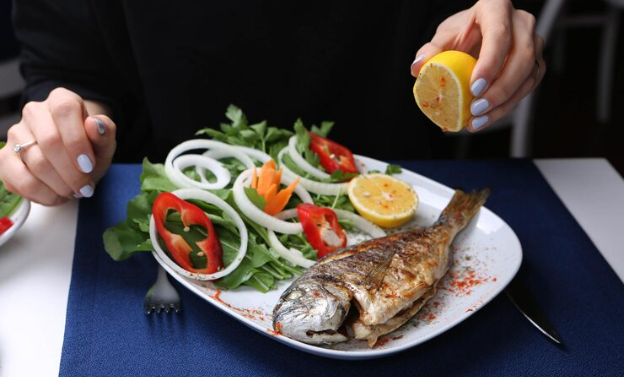
People who haven’t been to church in decades, people who couldn’t tell you the difference between Ash Wednesday and Palm Sunday, still find themselves in a queue outside a fish and chip shop on Good Friday afternoon without quite knowing why. It’s possible that this is simply habit passed down through families. It’s also possible that certain customs endure because they have broken free from their initial guidelines and evolved into something looser, like a ceremony without a set of rules.
Fish and chips and Good Friday have become almost synonymous, particularly in the UK. Good Friday is the busiest day of the year, according to the nation’s fish and chip businesses, with lines developing outside generally uncrowded locations and the scent of fried batter lingering over high streets across the nation. It has an almost loving quality. A nation that has generally drifted away from regular church attendance is still coming together to observe a long-standing fast with newspaper and vinegar.
A two-thousand-year-old act of penance that has evolved into a delightful end-of-week supper that many people look forward to every spring, it’s difficult not to find something touching in that. Grief and sacrifice were the original intentions. For many, it has evolved into something more like to comfort. That might not be such a contradiction after all.
