
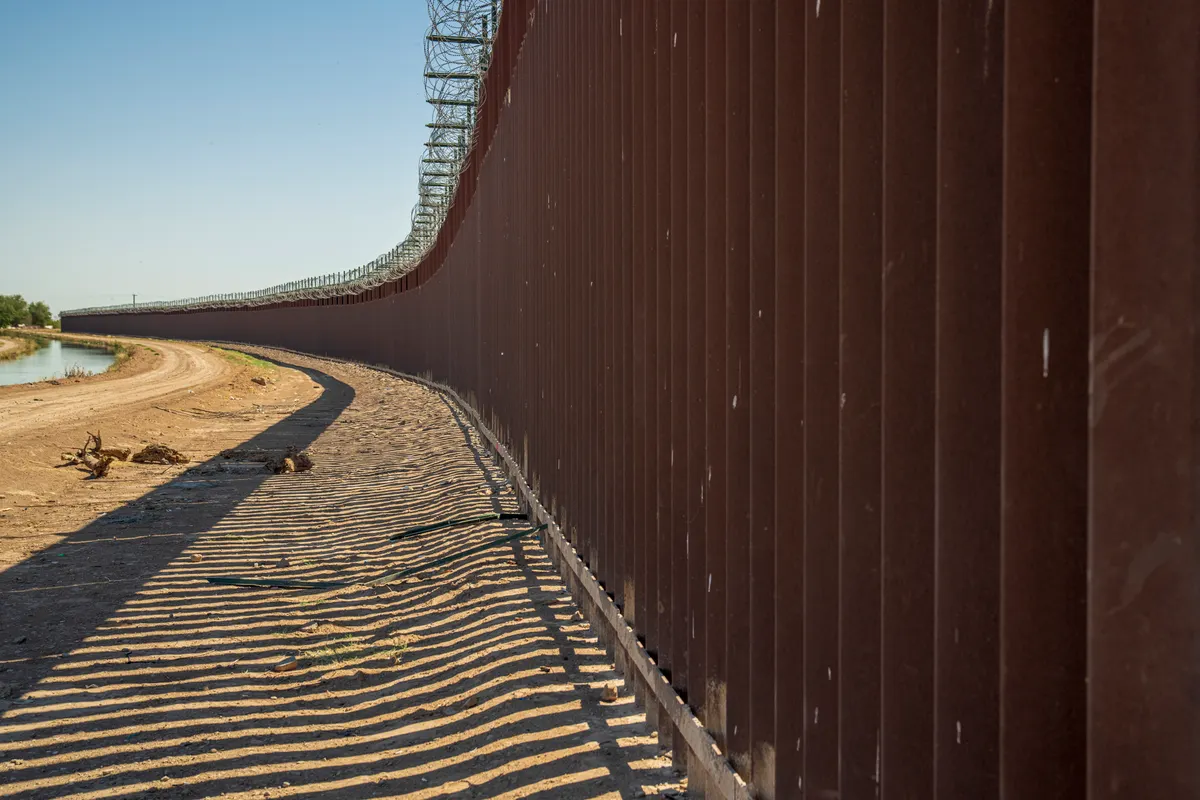

Construction of a second border wall through Organ Pipe Cactus National Monument in Arizona is under way, even as a separate Customs and Border Protection (CBP) project at Big Bend National Park in Texas has been temporarily halted following public backlash. The Organ Pipe Cactus border wall work began earlier this week, with federal contractors moving in to clear protected land in the Sonoran Desert, a move that has drawn sharp criticism from park advocates, indigenous communities and visitors who encountered the cleared site on foot.
Organ Pipe Cactus border wall raises fears for desert ecosystems
The National Park Service announced road closures at Organ Pipe Cactus National Monument earlier this month in response to the ongoing construction. The scope of ecological harm remains uncertain, but advocates say damage to the Sonoran Desert’s fragile ecosystems is already evident from the first wall built at the site years ago.
Sanober Mirza, Arizona Senior Programme Manager for the National Parks Conservation Association (NPCA), described the construction in stark terms. ‘This is a reckless assault on one of our most extraordinary national parks. The administration is tearing through fragile desert habitat and sacred cultural sites, all to build a wall that duplicates the one already standing,’ Mirza said. She added that ‘damage from the first wall, built years ago, has already devastated wildlife migration routes, water access, and cultural sites in a national park that is unlike any other. The environmental and cultural impacts weren’t considered then, and they aren’t being considered now.’
A portion of the historic Arizona Trail has also been closed at Coronado National Memorial, a nearby National Park Service site that sits on one of the last remaining wildlife corridors along the border. Construction at Coronado is compounding concerns already centred on Organ Pipe Cactus, where advocates argue that the cumulative impact of two walls in the same protected landscape is without precedent.
Among the most pressing concerns is the fate of Quitobaquito Springs, a spring-fed pond within Organ Pipe Cactus that has long served as both a ceremonial site for indigenous communities and a critical water source for desert wildlife. The site has been historically stewarded by the Hia C-ed O’odham and Tohono O’odham tribes. Mirza said the second wall compounds existing harm: ‘A second wall is adding insult to injury, particularly for the cultural landscapes protected here. Indigenous peoples have lived with, cared for, and depended on this landscape since time immemorial and many sites remain in active use, but are at risk of being destroyed or permanently altered by wall development.’
GAO has documented damage along the southwest border
The U.S. Government Accountability Office has already recorded damage to sensitive ecosystems, wildlife migration routes, water access, and cultural sites at Organ Pipe Cactus National Monument. A GAO report notes that federal and tribal lands account for approximately 760 miles, or about 40 per cent, of the nearly 2,000 total miles along the southwest border, with the tribal lands in Arizona primarily comprising the Tohono O’odham Nation reservation. Private and state-owned lands make up the remaining 60 per cent of the border and are situated primarily in Texas.
The NPCA has characterised ongoing construction as the ‘worst-case scenario’ for the affected National Park Service sites, and has accused CBP of showing a brazen disregard for the cultural and ecological significance of these areas. The association claims that construction blatantly ignores environmental and cultural laws, including the National Environmental Policy Act and the Endangered Species Act of 1973, with which federal agencies including CBP and the Department of Defense are legally required to comply.
Big Bend project halted, but Organ Pipe Cactus border wall work continues
The situation at Organ Pipe Cactus is unfolding alongside a parallel dispute at Big Bend National Park in Texas, where CBP’s $1.7 billion project saw bulldozing begin on 5 August before being paused by a CBP boss pending a deeper investigation, following significant public outrage.
Bob Krumenaker, former superintendent of Big Bend National Park and chair of Keep Big Bend Wild, has been pressing the Department of Homeland Security for greater transparency over CBP’s plans for the park. He previously described CBP’s construction maps as containing ‘confusing details and contradictions.’ ‘Perhaps it is a clerical error. But it serves to further obscure whatever the actual plans are,’ Krumenaker said. ‘CBP’s lack of transparency raises suspicion and confusion. It needs to make its plans public now.’
CBP had previously characterised the Big Bend border project as still ‘in the initial stages of planning and design’ before bulldozing commenced on 5 August. That work has since been paused, but no such halt applies to Arizona. Construction at Organ Pipe Cactus National Monument is proceeding, leaving protected Sonoran Desert land on the U.S. side of the border exposed to ongoing construction damage. Advocates and park visitors are waiting to see whether federal legal obligations under environmental law will ultimately be enforced at either site.
