

The story of Eric’s Fish & Chips deviates from the typical British chippy model. Surrounded by fruit trees and the low Norfolk sky that gives the entire area its distinctive visual texture, the restaurant is located at Drove Orchards, a converted farm shop and food destination near Thornham on the North Norfolk coast.
You can learn something about the place’s positioning just by looking at its location. In the UK, the majority of fish and chip stores are takeaway counters with a few seats; you order at a glass-fronted counter and eat from paper. It’s not like Eric’s. It’s a sit-down restaurant with a cuisine that goes far beyond the typical cod-and-chips template, complete table service, and a decent beverages list.
| Eric’s Fish and Chips — Key Information | Details |
|---|---|
| Restaurant | Eric’s Fish and Chips |
| Restaurant Type | Modern British fish and chip restaurant |
| Cuisine Influence | Traditional British with European twist |
| Location | Drove Orchards, Thornham, North Norfolk |
| Full Address | Drove Orchards, Thornham Rd, Hunstanton PE36 6LS |
| Year Opened | 2015 |
| Phone | +44 1485 525886 |
| Service Style | Sit-in dining and tapas-style sharing |
| Operating Hours | 12 to 8:30 PM, seven days a week |
| Outdoor Seating | Available |
| Reservations | Not accepted |
| Vegetarian Options | Available |
| Region | North Norfolk Coast |
| Featured Specialties | Line-caught cod, battered squid rings, Kansas-style chicken wings |
| Beer in Batter | Locally brewed |
Making their favorite fish and chips the right way was the restaurant’s proprietors’ rather straightforward goal when it debuted in 2015. Easy. New. Delicious. based on the finest local foods that are accessible. On paper, the framing seems modest enough. The implementation has been more ambitious than the pitch indicates, as evidenced by walking through the actual menu and observing how the kitchen runs.
The cod comes from sustainable sources and is line-caught. Instead of using the typical factory mixes that most chippies use, the batter incorporates authentic local beer. Traditionally, the chips are fried. On-site, the tartare sauce is prepared by hand. Instead of being poured from a catering can, the curry sauce, a North Norfolk fish and chip shop mainstay that doesn’t receive much attention from food writers but is very important to the people, is produced at home.
Over time, the menu has changed in ways that set Eric’s apart from its more traditional competitors. One of the restaurant’s defining characteristics is its tapas-style sharing strategy. Squid rings that are battered. King prawns. A distinctively Norfolk-coast flavor is fried black pudding. Kansas-style chicken wings, which appear to have been taken from American gastropub culture and subtly incorporated into the menu in a way that gives them the impression that they have always been there.
What has contributed to Eric’s wider appeal is its willingness to go beyond the strict cod-haddock-plaice triangle that characterizes most British fish and chip menus. Travelers seeking a sophisticated supper discover one. Traditional comfort cuisine is still available to locals seeking it. Typically, the two audiences have different needs when it comes to a chippy. Eric’s has worked out how to cater to both.
The success of the restaurant is contextualized by the North Norfolk shore itself, which is worth considering. Over the past ten years, the area has subtly developed into one of England’s more intriguing tourist culinary scenes. Wells-next-the-Sea, Holkham, Burnham Market, and the Norfolk coast as a whole have drawn gastropub openings, London weekenders, and the kind of small-batch food producers—local cheesemakers, artisan bakers, smokehouse operations—that alter the possibilities for a restaurant like Eric’s.
There is still enough fishing activity along the North Norfolk coast to provide seafood that is truly fresh. The meat items, seasonal vegetables, and potatoes used in the wider menu are produced in the local agricultural hinterland. A place like Eric’s may flourish because of the combination of a robust supply chain and a tourism industry that supports higher price points than would be justified by simply local trading.
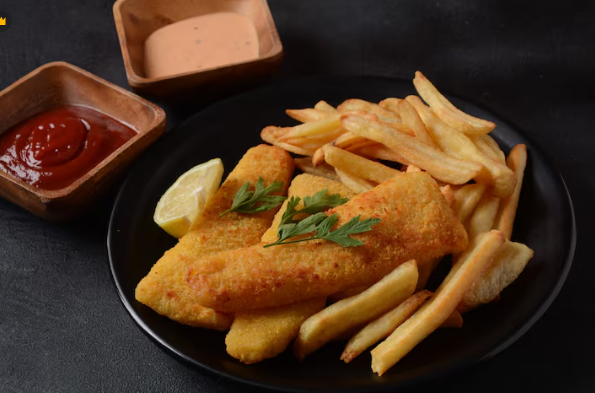
The ambience of entering the Drove Orchards location adds to the experience in ways that the menu can’t fully convey. There is a laid-back, family-friendly atmosphere in the dining room. On balmy afternoons, cyclists, dog walkers, beachgoers, and the kind of mixed weekend population that brings the Norfolk coast to life in the summer occupy the outside seats.
Queues during busy times are a result of Eric’s reservation policy, which has become ingrained in the establishment’s ethos. People are waiting. They go to the bar and order pints. Instead than being a hindrance to the visit, the wait becomes an integral part of it.
Sitting at one of the wooden tables on a Saturday afternoon and observing the orders pouring out of the kitchen gives you the impression that Eric’s has achieved something unique that other modern chippies fall short of. The cuisine is actually superior than that of a conventional chip shop. Compared to the majority of British fish-and-chip dining, the environment is actually more cozy.
Although they are more expensive than the typical takeaway counter, the pricing are still fair given the quality of the food. There are now several Eric’s locations, and other operators have started using similar strategies. Whether the larger fish-and-chip-restaurant model that Eric’s helped pioneer continues to spread throughout the rest of the British coast depends on factors like local economies, tourism trends, and changes in what British diners truly want from coastal food.
Meanwhile, the Drove Orchards original continues to operate as it has since 2015, serving twelve hours a day, seven days a week. In the contemporary restaurant business, that level of regularity is a quiet accomplishment in and of itself.
